How Nicolas Puig Found Science Along Lebanon’s Coast
What does a French anthropologist find when he follows Lebanon’s freedivers underwater?
For Nicolas Puig, a researcher at the Institut de Recherche pour le Développement (IRD) in France and affiliated with URMIS at Université Paris Cité; the answer has reshaped how we understand marine knowledge, conservation, and the role of coastal communities.
Puig’s work, including his research project and communication titled “Lesseps et les pêcheurs, vers une éco-anthropologie de la mer libanaise” (2020s), situates itself within eco-anthropology; a field that examines the dynamic relationships between human societies and their environments. His research explores how Lebanese fishers and freedivers are not merely resource users, but producers of ecological knowledge.
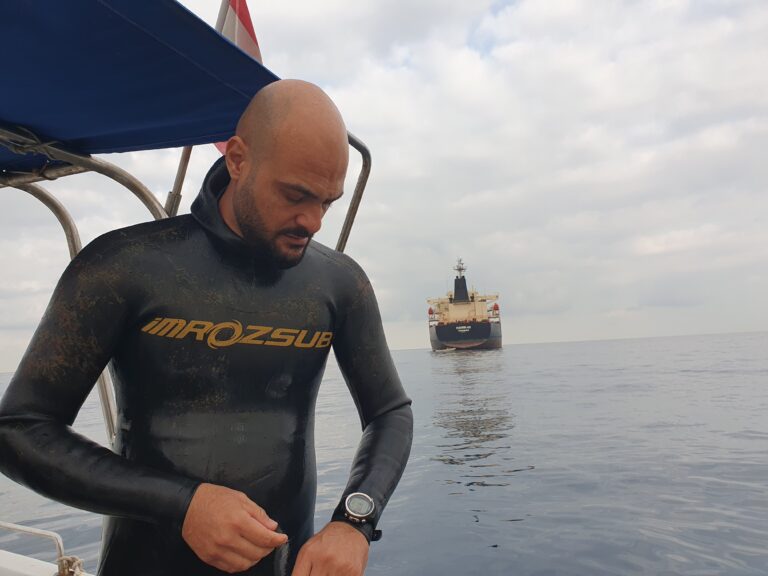
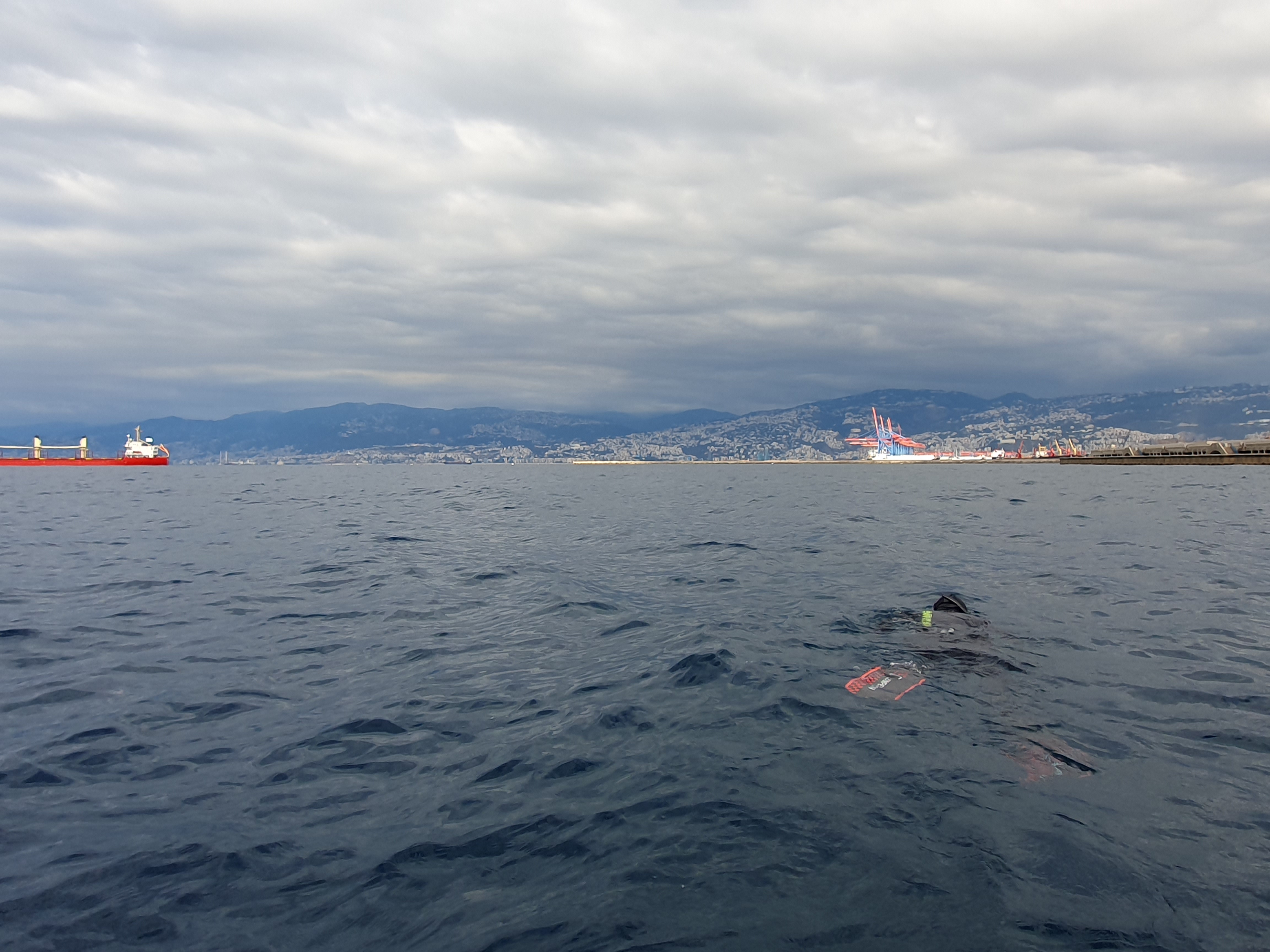
“Spearfishermen have an intimate and physical connection with the underwater world,” Puig explains. “They accumulate a wealth of empirical knowledge through practice.”
This insight lies at the heart of his work and it is reshaping how we think about marine conservation in Lebanon.
Listening to the Sea
Puig’s research uses an approach as innovative as it is intuitive: listening to the sea.
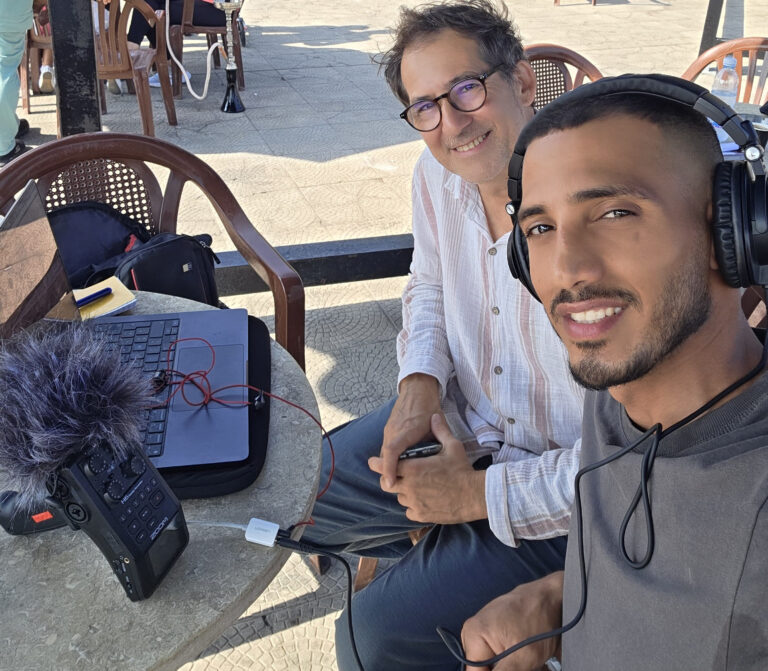
By equipping freedivers with underwater cameras and microphones, his team captures not only what is seen beneath the surface, but also what is heard. Together with fishers, they analyze these recordings reconstructing underwater experiences in ways that traditional scientific methods cannot.
What emerged surprised even the researchers. A constant crackling noise produced by small marine organisms forms the acoustic background of the sea. And fishers had already noticed it was changing. Over their years in the water, they had observed this soundscape shift with the seasons, with pollution, and with ecological disruption.
This “immersive approach” does more than document the sea. It transforms fishers from informants into active contributors to scientific knowledge.
A Sea Under Pressure
For those in the water every day, the transformation of the Mediterranean is undeniable. The fishers in Puig’s research consistently report:
- The rapid spread of invasive species such as lionfish
- The decline of native species like local sea urchins (“tutya”)
- Increasingly unpredictable fish stocks
These frontline observations align with what scientists are measuring from above: rising sea temperatures and the “tropicalization” of the Mediterranean, pollution from untreated wastewater, rapid coastal development, and fishing practices pushed to the limit by economic crisis.
For fishing communities, these are not abstract environmental concerns. They are immediate threats to livelihoods and long-term survival.
From Research to Action: The Nassim Al Baher Project
Puig’s research points to a gap and Fair Trade Lebanon is working to close it.
The Fair Trade Lebanon-led Nassim Al Baher project, implemented with the support of Agence Française de Développement (AFD), is built on the same premise that drives Puig’s work: fishers are already observing change. What they need is structure, support, and recognition.
Working along Lebanon’s northern coast, the project:
- Connects fishers, cooperatives, and researchers
- Supports more sustainable fishing practices
- Creates channels to document ecological change
- Strengthens livelihoods in vulnerable coastal communities
In doing so, it moves beyond conservation as a top-down process; placing local knowledge at the center of environmental action, exactly as Puig’s research suggests it should be.
As environmental pressures on the Mediterranean intensify, the future of the sea may well depend on those who know it best.
And on our ability to listen.
Follow Fair Trade Lebanon to stay updated on the Nassim Al Baher project and our work supporting Lebanon’s coastal communities.
#MarineConservation #Lebanon #FairTrade #Sustainability #FishingCommunities #NassimAlBaher #Mediterranean #CoastalCommunities #BlueEconomy