From pollution to possibility: Building a sustainable Mediterranean together
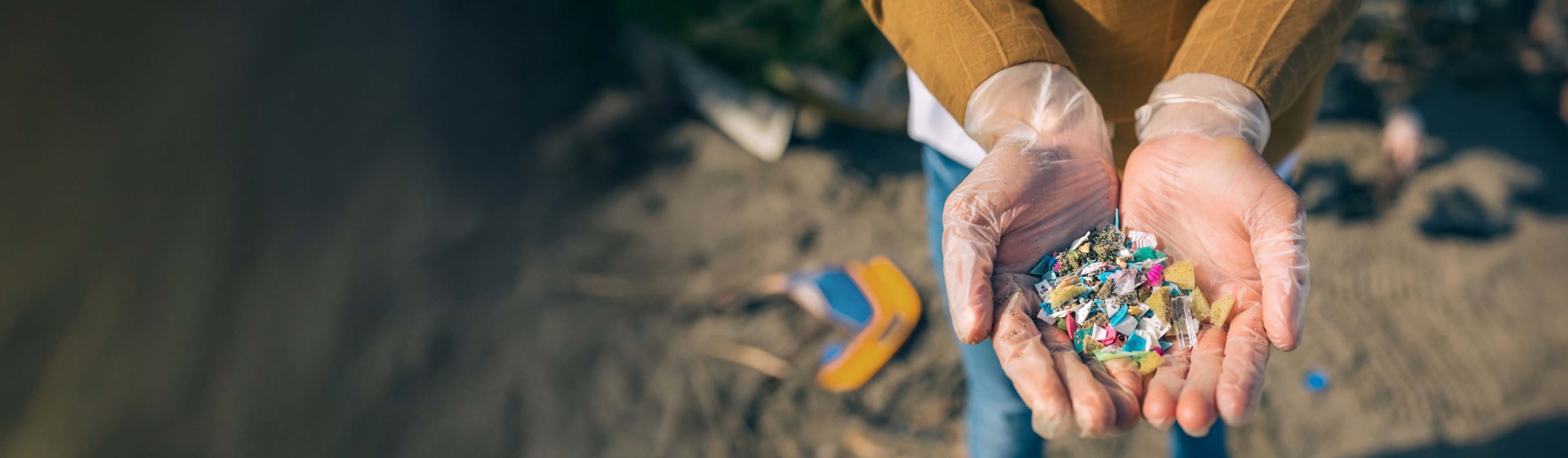
Plastic pollution is one of the most pressing environmental challenges facing the Mediterranean today. Despite covering only 1% of the world’s ocean surface, the Mediterranean holds 7% of global microplastics. Its semi-enclosed waters make it particularly vulnerable, trapping waste that accumulates year after year.
For Lebanon, with its 220 km of coastline, the issue is especially urgent. More than 3,300 tons of plastic leak into the sea annually, and 76% of beach litter is plastic. Rivers—lifelines for agriculture and communities—are now carrying microplastics at alarming levels, with some studies recording between 5.2 and 20.1 items/m3 (Jemaa et al., 2021).This is more than an environmental concern. Plastic pollution has economic and social consequences. Tourism, fisheries, and the wider maritime economy already lose €641 million each year due to marine litter.
A shared Mediterranean responsibility
The Mediterranean connects us all, and its health depends on collective responsibility. Solutions must therefore be regional, involving governments, organizations, and communities across the basin, as coastal pollution is considered a transboundary issue in the basin.
From challenge to opportunity
While the numbers are sobering, Lebanon is also proving that action is possible. What stands out are solutions that link environmental protection with community well-being and economic resilience.
- Sustainable fishing practices: Fishermen are adopting seasonal fishing calendars and training in responsible practices, helping to preserve fish stocks while ensuring long-term livelihoods. However, this approach will also require coordination with the relevant ministries to ensure that fishermen’s needs and rights are protected, particularly in aspects such as social protection and access to healthcare. It is equally important to create opportunities for alternative income activities and ensure fair market access, allowing fishermen to temporarily pause their fishing practices when needed without compromising their financial security. Income diversification adopted by fishers may reduce coastal fishing pressure.
- Recycling and circular economy: Discarded plastic fishing nets, once abandoned in the sea, are now being collected and transformed into new products. This not only reduces pollution but also creates green jobs.
- Empowering women and youth: Communities are diversifying their incomes through eco-tourism and seafood processing. These activities reduce reliance on overfishing while creating opportunities for women and younger generations.
- Education and awareness: From schools to coastal villages, awareness initiatives are reshaping how communities interact with the sea. Education is ensuring that the next generation understands both the risks of pollution and the value of stewardship.
From words to action
Across Lebanon, initiatives are showing what a holistic response to marine pollution can look like. Fair Trade Lebanon is among the organizations driving this change by linking environmental sustainability with community empowerment and local development.
Through projects that combine sustainable fishing practices, circular economy solutions, and livelihood diversification, Fair Trade Lebanon promotes a model where protecting marine ecosystems goes hand in hand with improving social and economic well-being. This integrated approach demonstrates that tackling plastic pollution is not just about cleaning the sea—it’s about rebuilding the relationship between people, nature, and opportunity.
Looking ahead
Plastic pollution is a global issue, but its solutions often begin locally. Lebanon’s experience shows that by engaging communities, investing in circular economies, and prioritizing education, it is possible to protect the sea while also supporting livelihoods.
One initiative that illustrates this integrated approach is Nassim Al Baher, implemented by Fair Trade Lebanon with the support of the French Development Agency. It brings together communities, science, and sustainable practices to protect the sea while creating opportunities for people. It serves as a strong reminder that environmental action and economic development can go hand in hand.
Protecting the Mediterranean means protecting our economies, our health, and our shared future. With collective action, it can remain a source of life for generations to come.
References
Jemaa, S., Mahfouz, C., Kazour, M., Lteif, M., Hassoun, A.E.R., Ghsoub, M., Amara, R., Khalaf, G., Fakhri, M., 2021. Floating marine litter in eastern Mediterranean from macro to microplastics: the Lebanese coastal area as a case study. Front. Environ. Sci. 9, 699343 https://doi.org/10.3389/fenvs.2021.699343.